How eSIM Vendors and Dealers Work
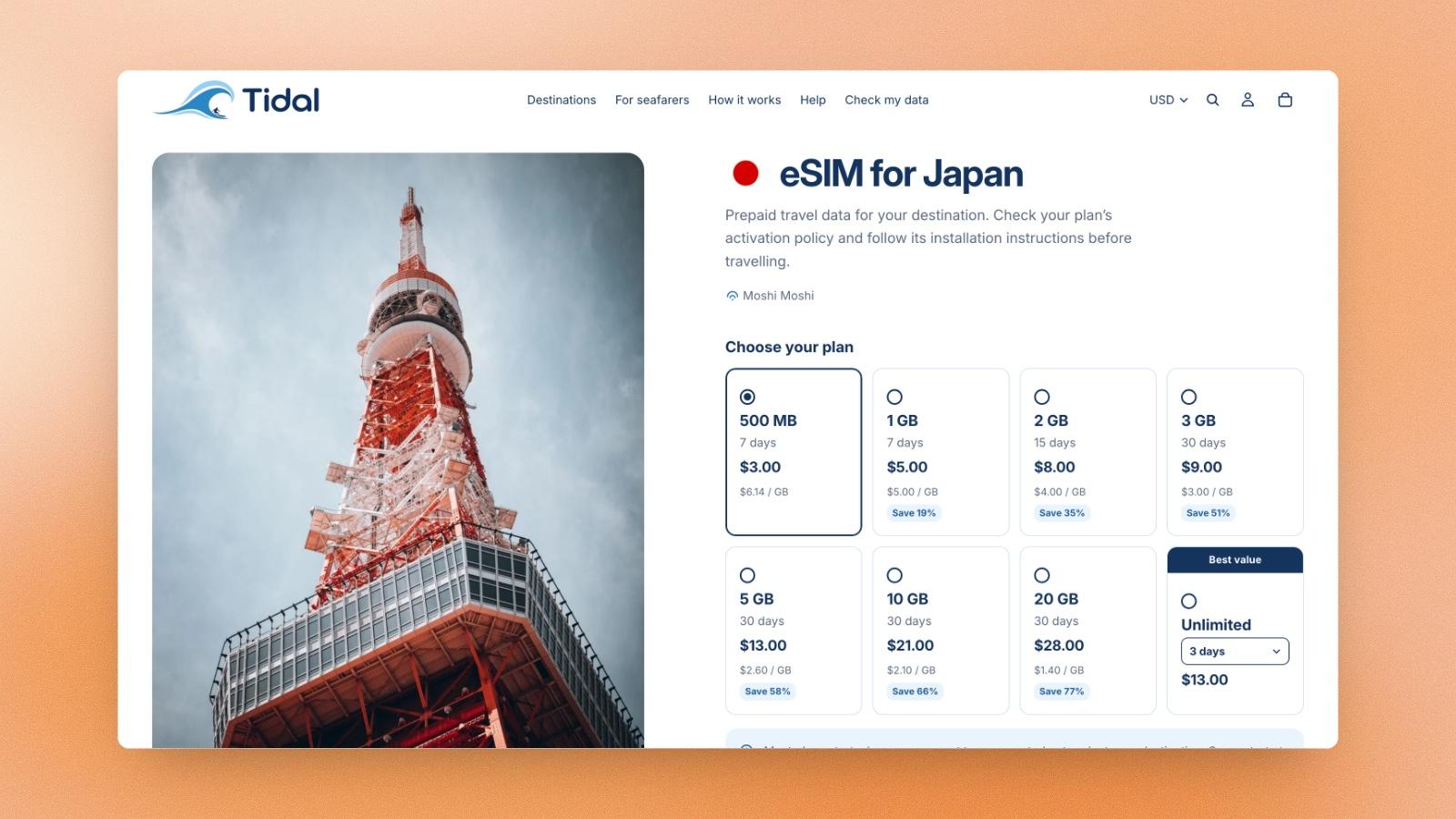
I recently finished building Tidal, a travel eSIM store on Shopify that sells data plans for 217 destinations. Before writing any code, I had to understand how the eSIM business is organised: who owns the network, who makes the eSIM, who sets the price, and who the customer actually buys from.
This post explains that supply chain in plain terms. It is useful if you are thinking of starting an eSIM brand, or if a client has asked you to build one.
The four layers
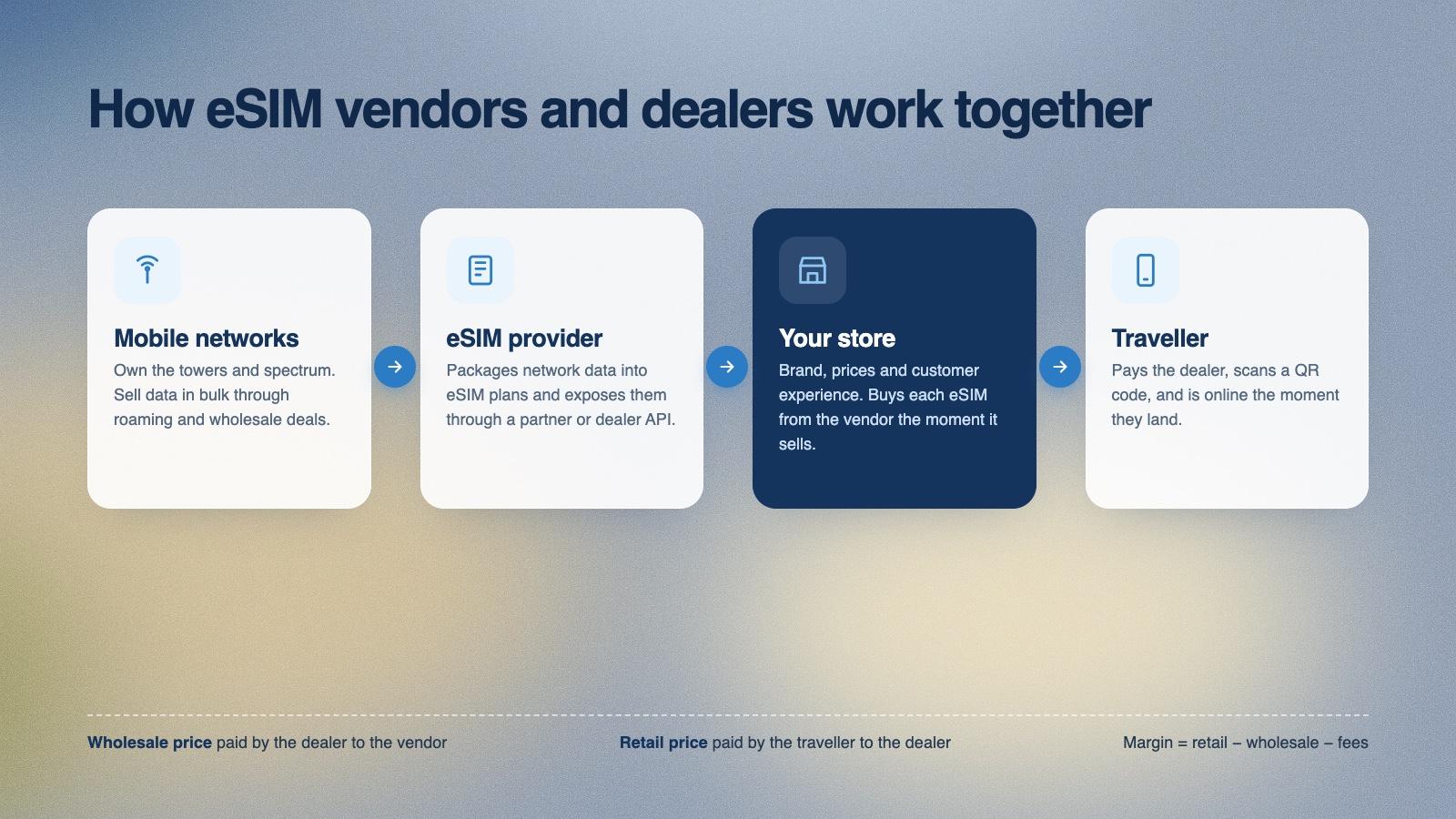
Every travel eSIM passes through four layers, as shown in the diagram at the top of this post:
- Mobile networks. The operators who own the towers and spectrum. They sell data in bulk through roaming and wholesale agreements.
- The eSIM vendor. A company that buys that data in many countries, packages it into eSIM plans, and makes the plans available to other businesses through a partner or dealer API. Airalo Partners is one example; there are several others.
- The dealer. That is your store. The dealer owns the brand, the prices, the website and the customer relationship. It holds no stock: it buys each eSIM from the vendor at the moment a customer pays.
- The traveller. They pay the dealer, scan a QR code, and get online when they land.
You will also see dealers called resellers or partners, and vendors called providers or wholesalers. The model is the same whatever the name.
Vendor vs dealer: who does what
The vendor handles:
- network deals and coverage in each country;
- creating the eSIM profile and its QR code;
- the catalogue of plans and the wholesale prices;
- the minimum retail price dealers must respect;
- optional white-label delivery emails, and escalations for network problems.
The dealer handles:
- the brand, the website and the marketing;
- the actual retail price, at or above the vendor's minimum;
- taking payment from the customer;
- reading the vendor's catalogue and placing orders through its API;
- first-line customer support.
The key point: the dealer is a software and marketing business. The vendor does the telecom work. That is why one developer can build a working eSIM brand.
What a vendor gives a dealer
A good vendor gives a dealer much more than a price list. On Tidal, the Airalo Partner API provided:
- A catalogue endpoint. Every package with its countries, data amount, validity, operator details, and two prices per currency: the net price (what the dealer pays) and the recommended retail price.
- An order endpoint. Post a package ID and quantity, get back the eSIM: its ICCID, activation code, QR code and install instructions.
- Branded emails. The vendor can email the eSIM to the customer using the dealer's own brand name and logo, so the customer never sees the vendor.
- A usage endpoint. Remaining data, total data, expiry and status for each eSIM.
- Webhooks. Notifications when an eSIM has used 75% or 90% of its data, or is about to expire.
- A sandbox. A test mode where orders cost nothing, so the whole flow can be built and tested before real money is involved.
- A prepaid balance. The dealer tops up credit with the vendor, and every order is deducted from it.
When comparing vendors, those last three matter most. A vendor without webhooks or a usage endpoint leaves you building workarounds, and a vendor without a sandbox makes you test with real money.
How a dealer makes money
The dealer's margin is simple:
margin = retail price − wholesale price − payment fees
Two rules shape everything else:
- The minimum retail price is contractual. Most vendors require dealers to sell at or above their recommended retail price, so partners cannot undercut the vendor's own consumer app. Treat it as a floor, not a suggestion: round prices up, never down.
- The floor applies after discounts too. If a price sits exactly on the floor, any discount code takes it below. On Tidal I solved this by lifting every price by 1 / (1 − 10%), so a 10% affiliate code lands exactly back on the floor. A script checks every one of the 2,040 plans before any code is created.
Currencies add one more trap. Vendors often publish fixed USD and EUR minimums alongside GBP. If your store converts prices with live exchange rates, a weak day can push a converted price below the vendor's USD minimum. The safe option is a manual exchange rate set just above the vendor's own ratio.
Here is an example with made-up numbers. Say the vendor charges £2.00 for a plan and sets a £3.00 minimum. You list it at £3.34, so that a 10% code lands on £3.00. After a card fee of around 2% plus 25p, a full-price sale leaves you about £1.02 and a coded sale about 70p. Small per order, so volume and the absence of stock are what make the model work.
What happens after the customer pays
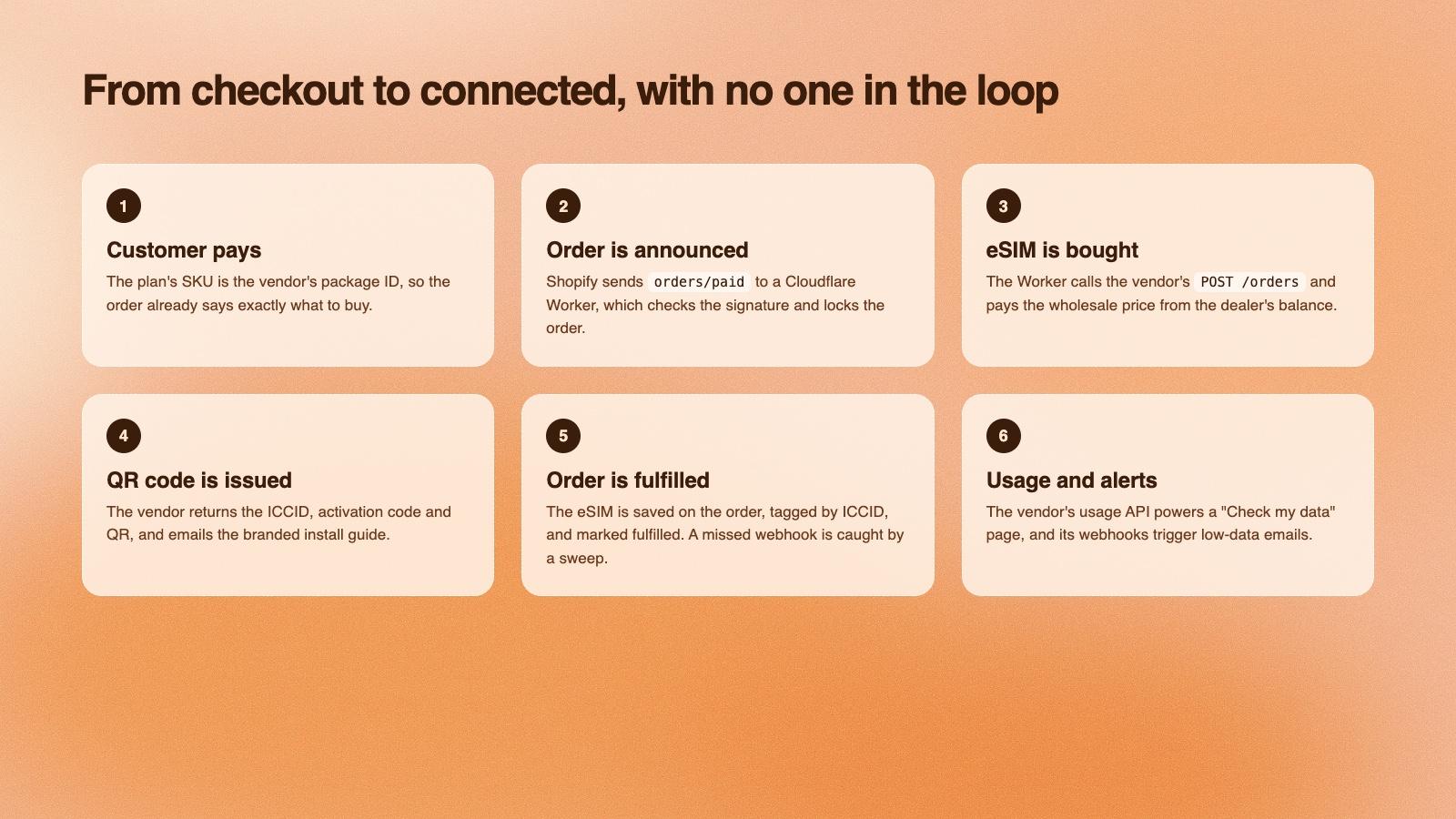
This is the part that needs real engineering. On Tidal it runs on a Cloudflare Worker:
- The SKU is the package ID. Each Shopify variant's SKU holds the vendor's package ID, so the order already says exactly what to buy.
- Shopify sends a webhook when the order is paid. The Worker checks its signature and replies within Shopify's 5-second limit, then works in the background.
- Lock before buying. Shopify retries webhooks, and a backup sweep looks for missed orders, so the same order can arrive more than once. Before buying, the Worker creates a lock on the order (a Shopify metafield that can only be created once). A second attempt sees the lock and walks away. Without this you will eventually buy the same eSIM twice.
- Buy, then save immediately. Each eSIM is written to the order the moment the vendor returns it, before the next line is bought. A crash halfway through resumes instead of repeating.
- Fulfil and tag. The order is marked fulfilled and tagged with each ICCID, so later webhooks from the vendor (which carry only the ICCID) can find it.
- Sweep. Every 10 minutes, the Worker looks for paid, unfulfilled orders a webhook missed.
Two more guards are worth copying. In production, never buy for a test-gateway order, since it is a fake payment. And keep the vendor's sandbox and production modes as explicit settings rather than guessing them.
Keeping the catalogue in sync
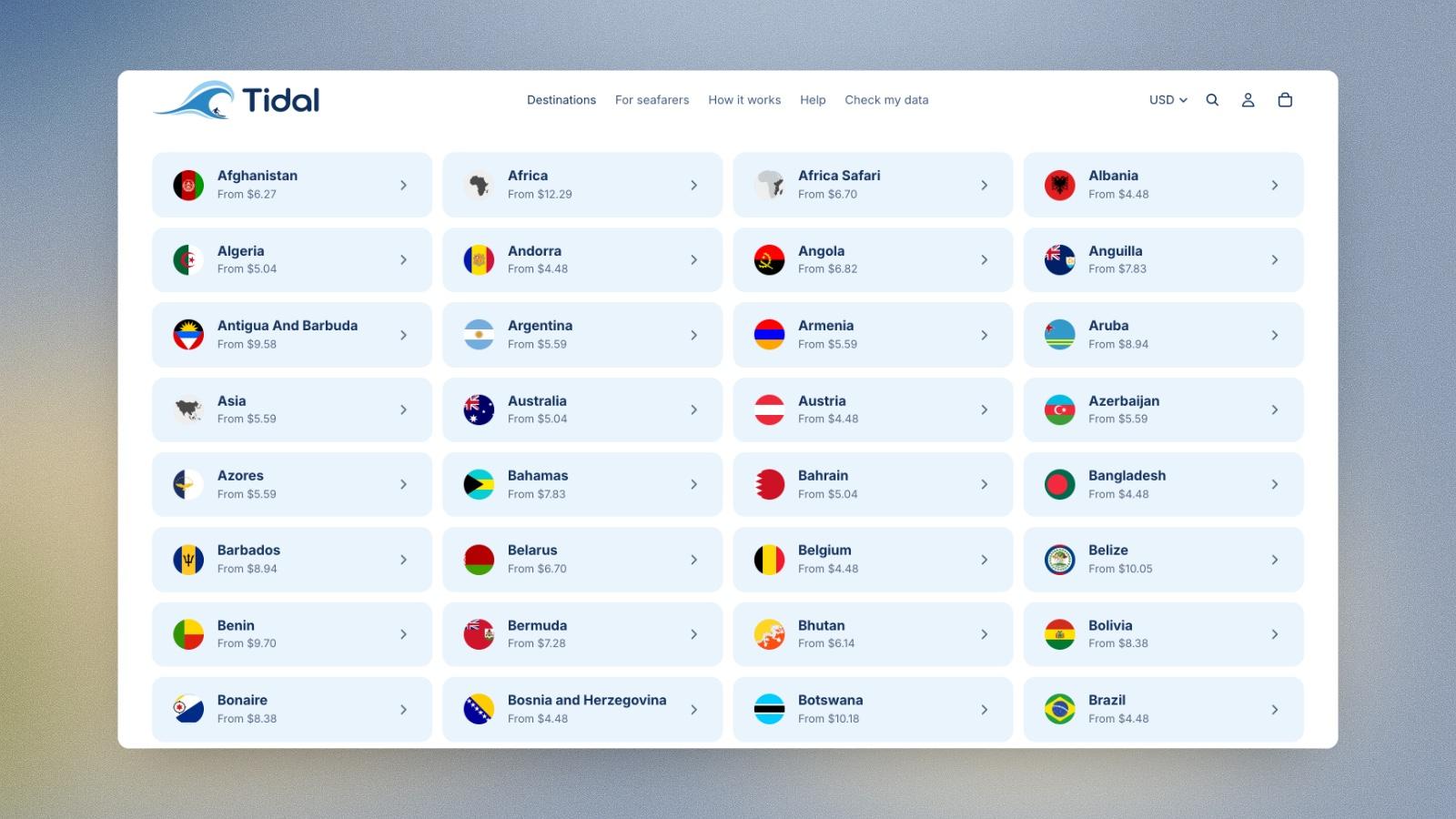
A vendor's catalogue changes constantly: prices move, new packages appear, old ones are withdrawn. A dealer that syncs once at launch will soon be selling plans at the wrong price, or plans that no longer exist.
On Tidal the Worker runs every minute and checks a small batch of destinations, so the whole catalogue is covered every hour. It updates prices, adds new plans as variants, and hides withdrawn plans rather than deleting them. It also refuses any price move above 50% in one step, which protects against a bad data day at the vendor.
After the sale: where customers check their data
This is the question I did not think about until late: once a customer has installed the eSIM, where do they see how much data is left?
Not in the vendor's app. An eSIM bought through a dealer does not appear in the vendor's consumer app, because the customer has no account there. And you should not send customers to that app anyway: the vendor's app sells eSIMs directly, so you would be handing your customers to a competitor.
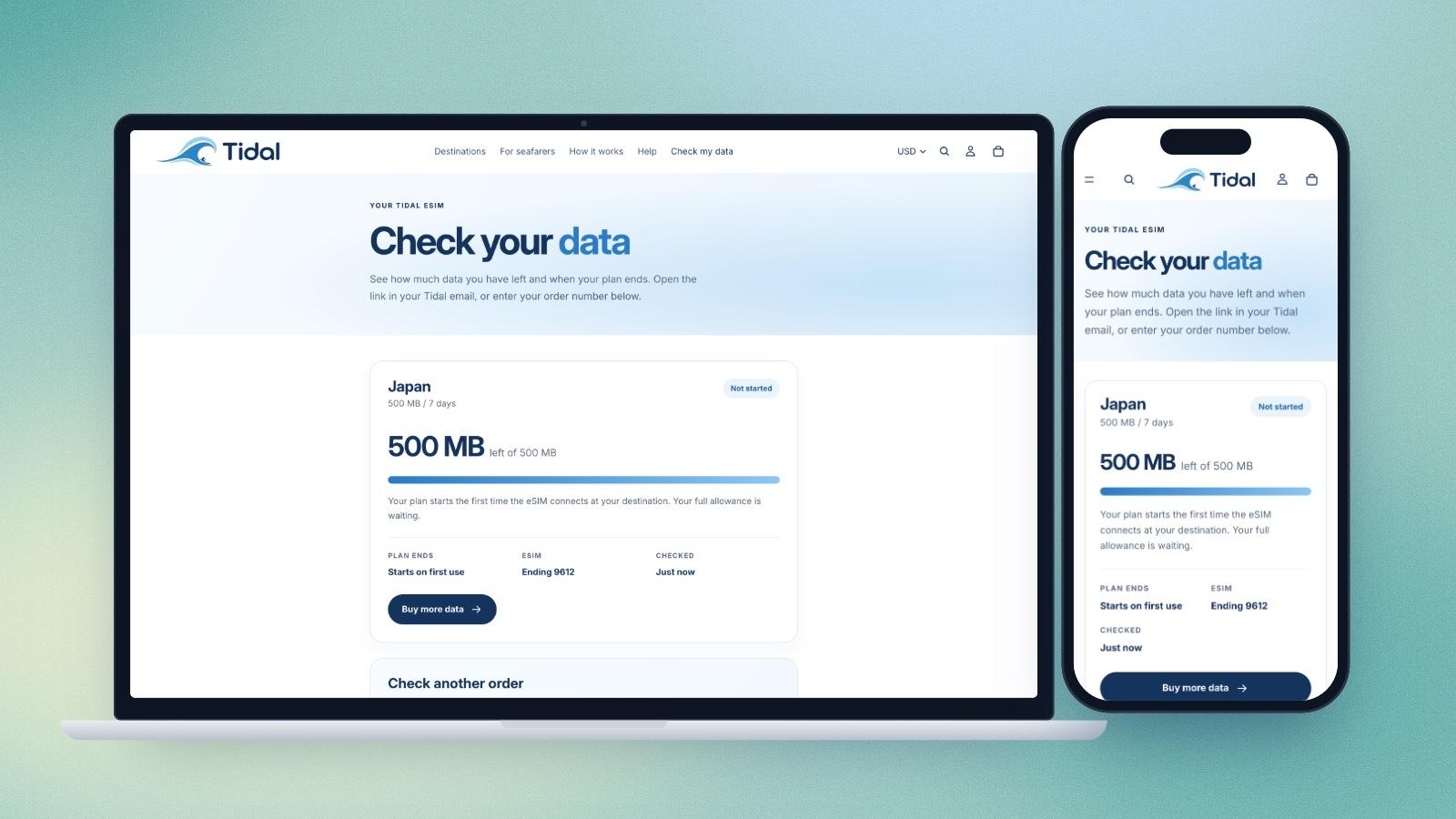
The answer is to build it yourself with the vendor's usage endpoint. Tidal's "Check my data" page:
- opens from a signed link in the customer's emails, so no login is needed and nobody can look up someone else's eSIM;
- also accepts an order number and checkout email, with a rate limit against guessing;
- shows remaining data, status (not started, active, running low, used up) and the plan end date;
- caches each answer for a few minutes so the vendor's API is not hit on every refresh.
Pair it with the vendor's low-data webhooks: email the customer at 75% and 90% used, with a link to buy another plan for the same destination.
A checklist for choosing a vendor
- Coverage and network quality in the countries your customers visit.
- API completeness: catalogue, orders, usage, webhooks and a sandbox.
- Pricing rules: what the minimum retail price is, and whether it applies per currency.
- White-label delivery: can it send the eSIM email under your brand?
- Top-ups: can customers add data to an existing eSIM, or must they buy a new one?
- Payment terms: prepaid balance or invoice, and what happens if the balance runs out mid-order.
- Support: who handles a customer whose eSIM will not connect, and how fast.
Summary
A travel eSIM store is a thin, well-built layer between a vendor's API and a traveller. The vendor handles networks and eSIM profiles. The dealer's job is the brand, honest pricing above the vendor's floor, fulfilment that never double-buys, a catalogue that stays in sync, and after-sale features like usage tracking that keep customers coming back to you rather than to the vendor.
You can see the finished store at tidalsim.com.
Let's Work Together
To do work with me, contact me here: LinkedIn