Shopify Development
Medical Skin Clinic - Doctor-Led Clinic and Skincare Shop on Shopify
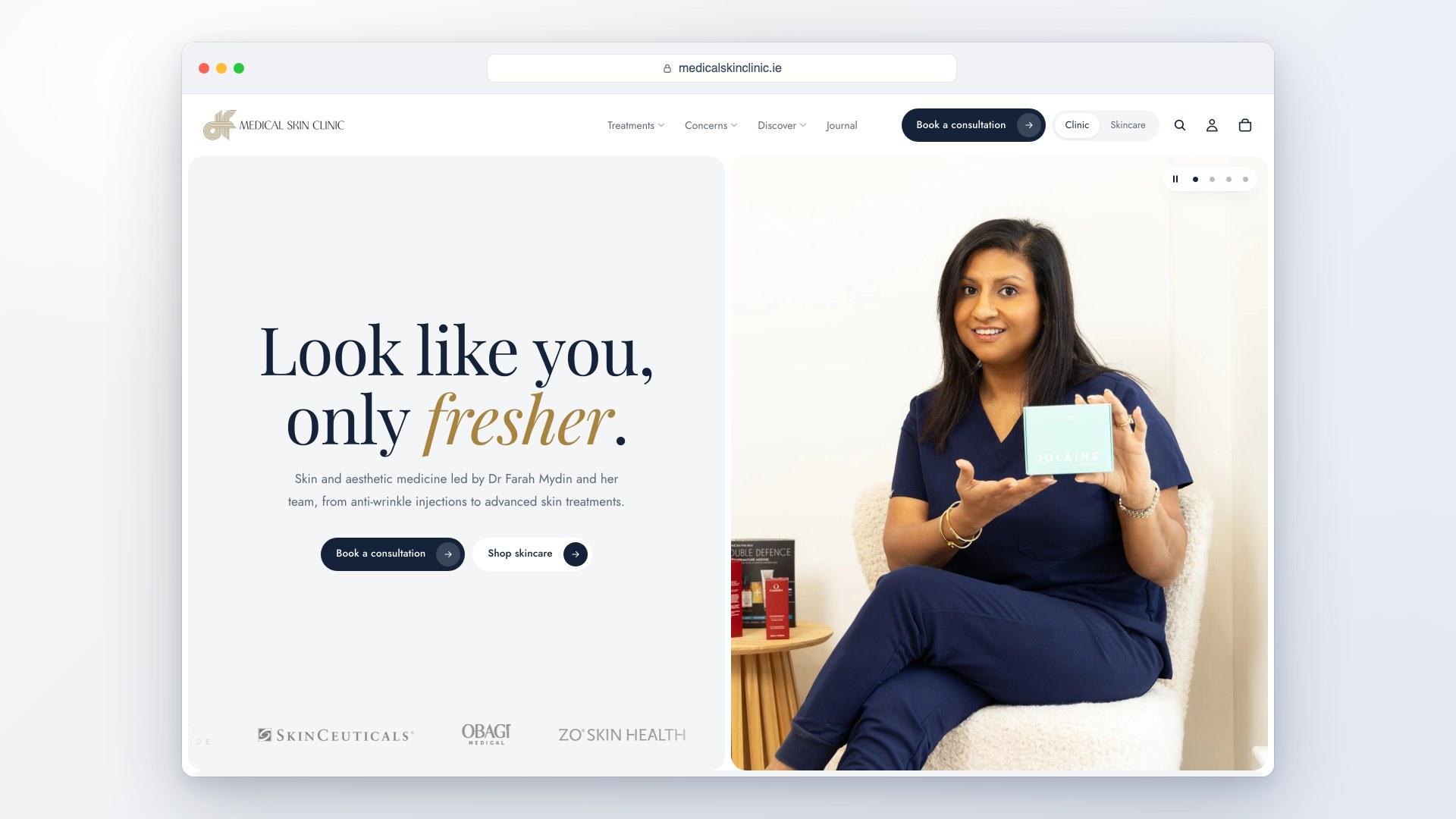
One Shopify store for an Irish skin clinic with two halves: a clinic site where every treatment page leads to a consultation, and a skincare shop with clinic-approved brands. Built on Horizon with 58 custom sections, 67 page templates driven by page metafields, curated routines sold as kits, grouped collection pages, and buy now, pay later through Humm. Launched on medicalskinclinic.ie with 239 redirects from the old WordPress site.
The Problem
Medical Skin Clinic is a doctor-led aesthetics clinic in Donegal, Ireland. Its old WordPress site mixed treatments and products in one long menu, every page looked different, and booking went straight to a third-party system with no explanation first. The clinic also wanted to sell the skincare it prescribes, which meant two very different journeys in one site: patients researching treatments that must start with a consultation, and shoppers who just want to buy. On top of that came strict rules for medical advertising: no prices on consultation-led treatments, no medical claims on cosmetic products, and real clinic photography wherever patients appear.
The Solution
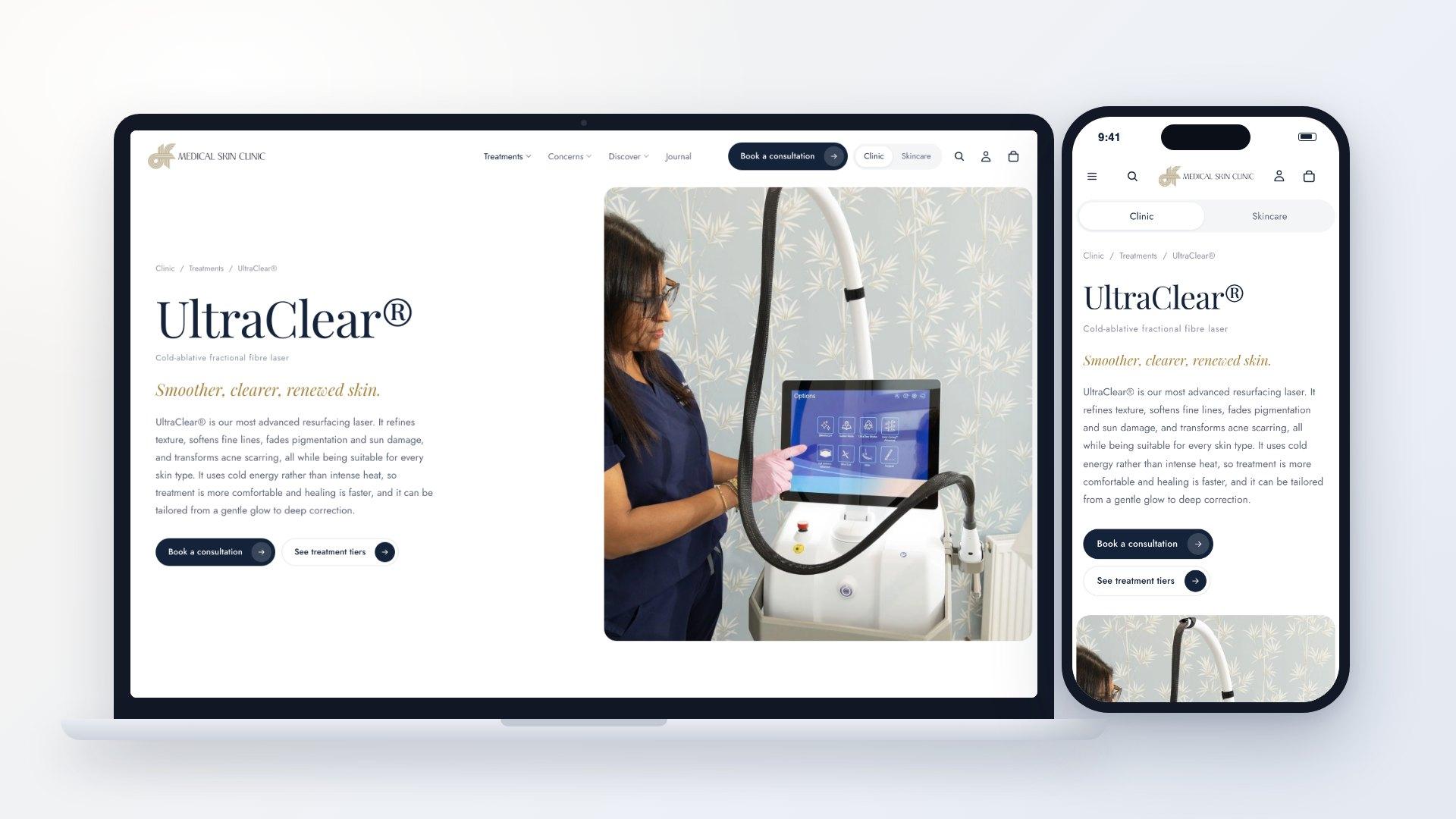
I built one Shopify store on the Horizon theme that knows which half each page belongs to. Clinic pages carry a Book a consultation button that always goes to one consultation page, which alone hands over to the clinic's booking system. Shop pages carry Add to bag and the cart. A shared concern spine (lines, acne, redness, pigmentation and more) links the two: a concern page shows the treatments for it and the products for it together. Each treatment page reads its own copy, facts and photos from page metafields, so the clinic edits content in Shopify admin instead of asking for a rebuild.
Screenshots
Key Features
- Clinic and skincare in one store: header world switch, two mega menus and click-through phone menus for each half
- One booking route: every Book button goes to the consultation page, the only page that hands over to the booking system
- Treatment, concern and device pages driven by page metafields, with prices hidden automatically on consultation-led treatments
- 67 page templates generated from each page's own copy by Python builders, rerun after any copy change
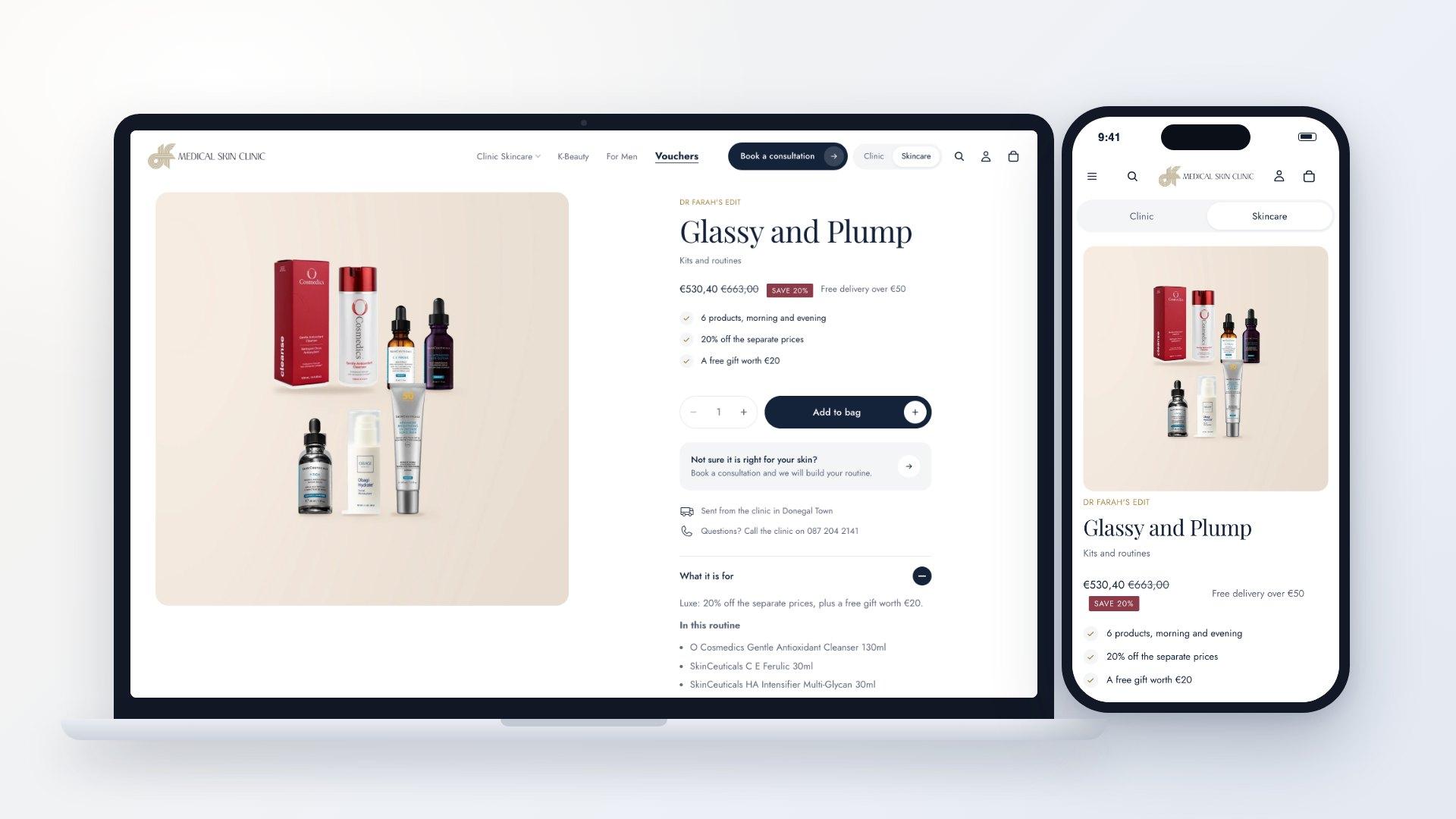
- Dr Farah's Edit: eleven curated routines sold as kits with compare-at pricing, in Luxe and On a Budget tabs
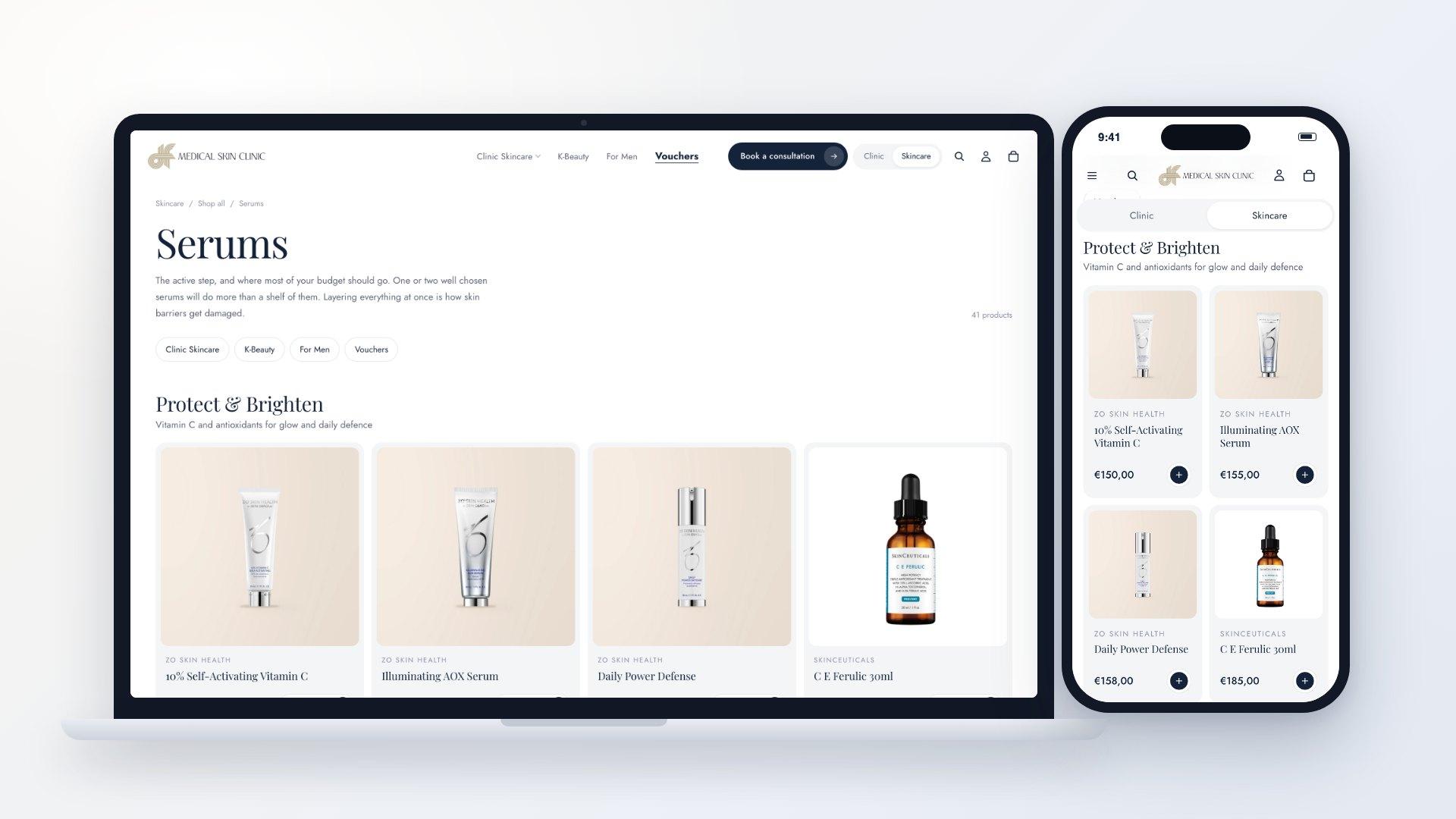
- Grouped collection pages: one collection shown as named groups, from picked collections or by product type
- Shop by brand tiles with live product counts, a featured brand and link pills, swiped sideways on phones
- One product card everywhere, with quick add to bag through the Cart API and the cart drawer
- Free delivery progress bar, welcome offer code and a gift voucher that records who each voucher is for
- Humm buy now, pay later at checkout, plus 239 redirects and full SEO metadata for the domain launch
Process
- Mapped the clinic and the shop onto one theme: a world switch in the header, two mega menus, two phone menus that open one level at a time, and a single rule that decides whether a page is clinic or shop.
- Designed a rounded, frosted look from an HTML prototype and built it as 58 custom msc- sections with dual font sizes for desktop and phones, plus a restyle of Horizon's header, product cards, product page and cart drawer.
- Moved every per-page fact into page metafields (intro, device line, duration, downtime, linked treatments and concerns, shop collection), with a consultation-led flag that hides prices entirely on treatments that must not show one.
- Wrote Python builders that turn each treatment and concern page's copy into its own template, so 67 page templates can be regenerated after a copy change instead of being edited by hand.
- Ran the catalogue through Admin GraphQL scripts: product copy split into structured fields, key points, warnings, routine step and skin type tags, automated collections on tags and vendor, and backups before every change.
- Built Dr Farah's Edit: eleven routines sold as kits with compare-at pricing, shown in Luxe and On a Budget tabs, plus grouped collection pages (serums by purpose, concern collections by Cleanse, Treat and SPF).
- Launched on the clinic's own domain: DNS records, 239 redirects from the old WordPress URLs, SEO titles and descriptions on every page, and Humm added as a buy now, pay later option for treatments Klarna would not cover.
Stack
frontend
backend
integrations